
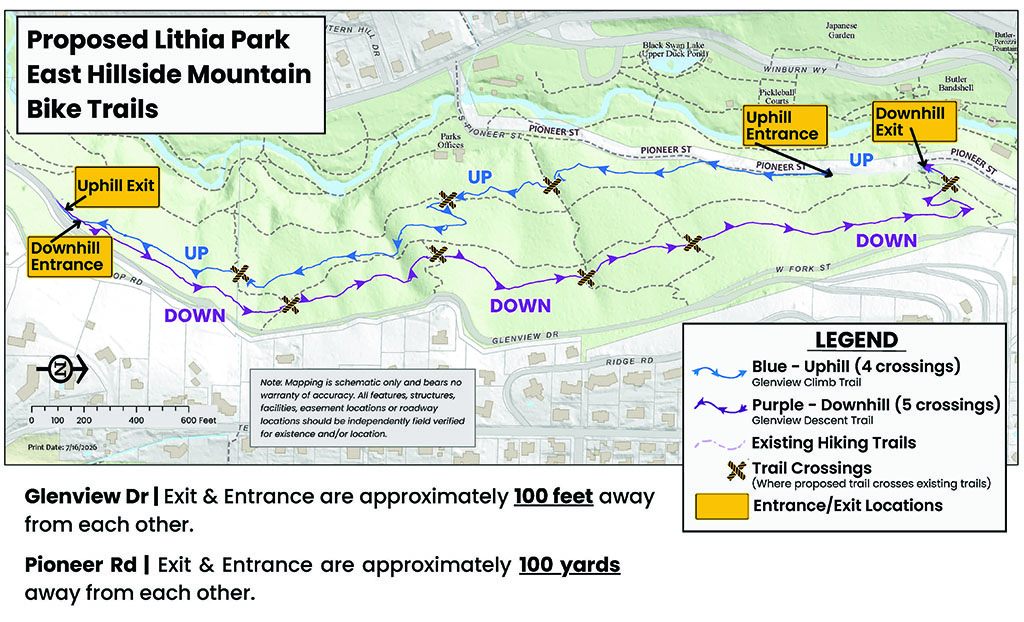
The Ashland Parks and Recreation Commission is currently considering a proposal by the Rogue Valley Mountain Bike Association to cut two mountain bike trails through the undeveloped upper eastside slopes of Lithia Park. This would open Ashland’s beloved “crown jewel” to mechanized recreation for the first time, and would fragment the only area of native pine-oak woodland in the park.
Rogue Valley Audubon Society opposes this proposal, and we have submitted the following comments. We encourage RVAS members, especially Ashland residents, to submit their own comments in opposition. A link to the proposal, and to the Parks and Rec comment form, are here: https://ashlandoregon.gov/262/Parks-Recreation. The deadline for comments is September 3.
Comments on the Lithia Park Mountain Biking Proposal
submitted on behalf of the Rogue Valley Audubon Society
by Pepper Trail, Conservation Co-Chair
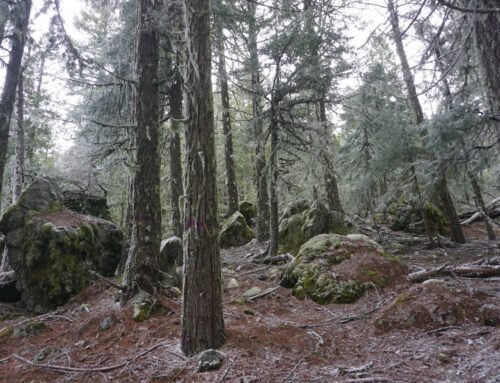
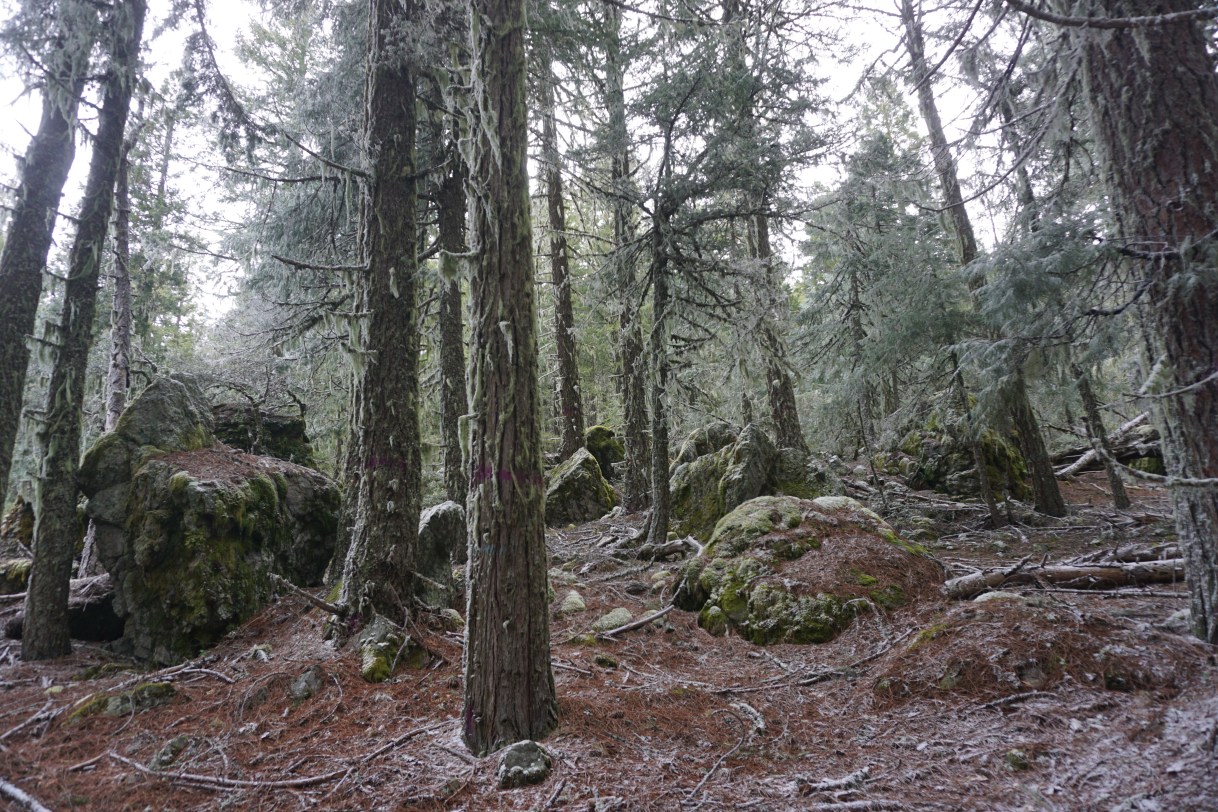
High above Ashland Creek and its busy corridor of paths, lawns, and event spaces, there is another side to Lithia Park, Ashland’s beloved crown jewel. This is the park’s only natural area, an intact expanse of native pine-oak woodland rising up the steep eastern slope of Ashland Creek as far as the lower reaches of the Ashland Watershed, providing a wildlife corridor and a system of pedestrian trails for quiet enjoyment and reflection. Here, native wildflowers bloom in the spring, birds like Oak Titmice, Black-headed Grosbeaks, and Lesser Goldfinches nest in the summer, and hushed silence can be found in the winter. Members of the Rogue Valley Audubon Society walk these trails to appreciate the birds and plants of Lithia Park’s “wild side,” and like many other residents and visitors we treasure this unique refuge of natural habitat in the midst of town.
It is this area that the Rogue Valley Mountain Bike Association (RVMBA) proposes to slice from end to end with two roughly parallel mountain biking trails, for uphill and downhill riders. This would open Lithia Park to mechanized recreation for the first time – except, that is, for the existing trespass in the natural area by mountain bikes, which are forbidden to enter the area by signs at every access point. Signs that are not respected. And it would funnel mountain bikers exiting the trails onto Pioneer Street, and thus smack into one of the busiest pedestrian crossings in Ashland, the heart of the Oregon Shakespeare Festival campus.
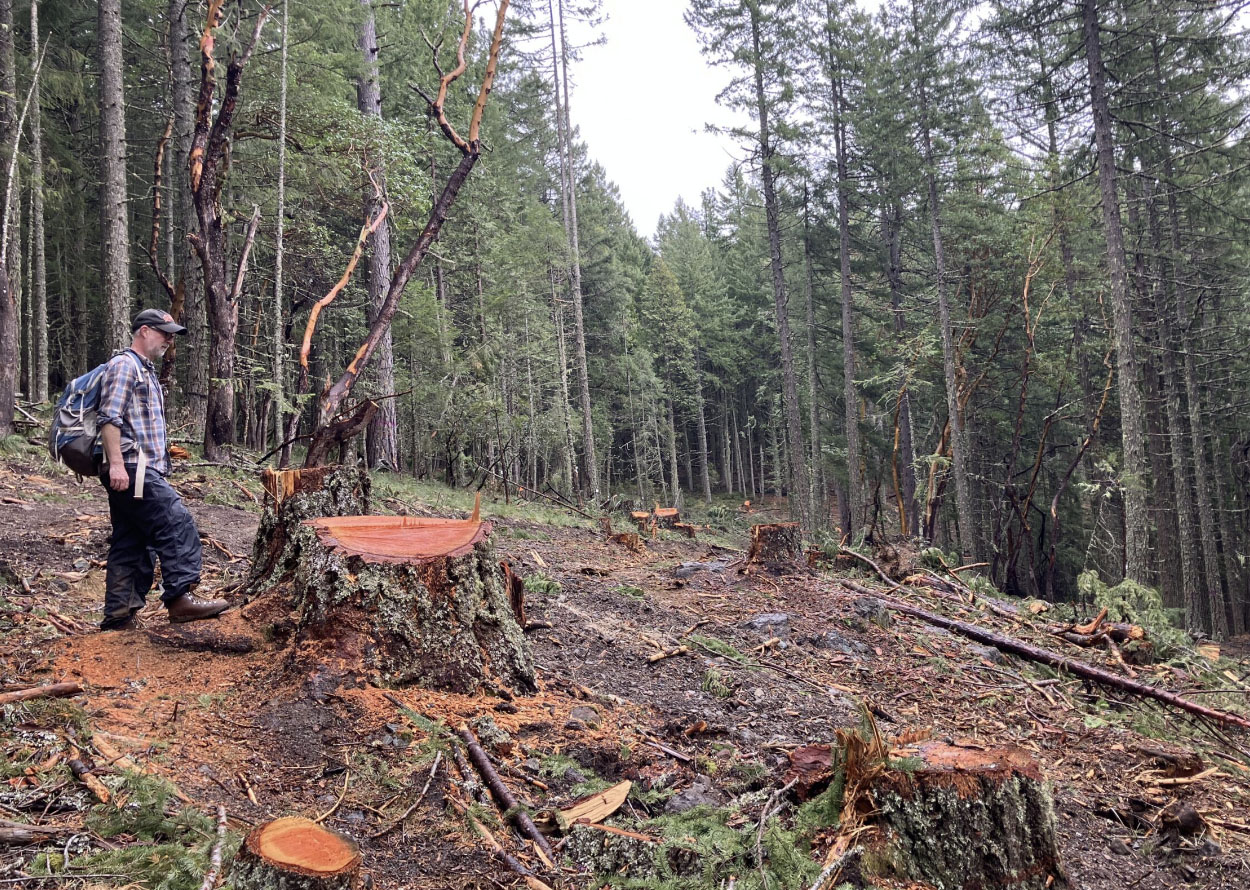
It is the height of irony that the Ashland Parks and Rec sign placed near the base of the proposed trail system includes this warning: “While visiting the proposed trail please be aware that there are rare shrubs and plants along the proposed trail area. Please take care not to disturb or trample these plants.” The proposed downhill bike trail would be 3-4 ½ feet wide and would be constructed by a “mechanical trail building machine, most commonly a mini excavator,” as stated in the proposal. Disturbance and trampling would be the inevitable result of this proposal – in fact, they are the essence of the plan.
What is the justification for sacrificing Lithia Park’s only natural area – the only intact pine-oak woodland within the city limits – for the use of mountain bikers? After all, Ashland already has a highly developed network for mountain biking, totaling 99 miles of dedicated trails in the watershed, according to the RVMBA website. But that, the proposal claims, is not enough. The trails cutting through Lithia Park would cater to mountain biking beginners – and the RVMBA clearly anticipates they would receive heavy use. In the words of the proposal “Being close to town, riders that are new to the sport could do laps on the trails to their heart’s-content and then retire to town for a post-ride treat.”
The RVMBA proposal’s attempts to anticipate and respond to criticisms are unconvincing. For example, it admits “A mountain bike on a trail can also be louder that the average pedestrian user, including the sound of tires on dirt, freewheel mechanisms of some rear hubs, potential for squealing brakes and other various rattles, etc.” but then merely asserts “Overall, we do not anticipate significant detraction from natural surroundings.” Hikers and nature-lovers strenuously reject that claim!
Elsewhere, the proposal acknowledges the existence of what it euphemistically calls “volunteer” (that is, illegally trespassing) mountain biking trails in Lithia Park’s natural area, and that the decomposed granite soils of the area are highly prone to erosion. It then suggests that the way to avoid the negative impacts of mountain bikes in this natural area is … to open the natural area to mountain bikes. The proposal attempts to support this counterintuitive argument by citing papers of questionable relevance to the Lithia Park situation – almost all concerning much larger park areas, and most from Australia. For example, the proposal reports “A study out of Australia noted that “formal” trails in a park were more than 6 times as popular as “informal” trails and had less erosional impact.” Even if this was applicable to Lithia Park, it makes clear that while unofficial, erosional trails may be less popular, their creation continues. In the case of the proposal Lithia Park trails, the parallel layout and close proximity of the uphill and downhill routes will almost certainly tempt riders to create unauthorized and environmentally damaging “shortcuts” between them. This seems especially likely as some riders look for steeper sections to add excitement to these beginner routes.
In another example of handwaving, the proposal claims with no supporting evidence “Any wildlife currently utilizing this area would by necessity already have a relatively high tolerance for human interaction.” This is immediately followed by the acknowledgement “Certainly, any animals that are not tolerant of the level of noise created by a mountain bike would not be expected in the area immediately adjacent to the trail while it is in use.” The anticipated heavy use of these trails means that the effects would be chronic and unavoidable. Nesting birds, for example, would be subject to ongoing disturbance.
Mountain bikers are an organized and passionate group, and their desire for beginner-friendly trails is understandable. However, Lithia Park is absolutely the wrong place for such a project. Once the peace and quiet, wildlife habitat quality, and natural habitat integrity of this area are lost, they will be lost forever.
So, the question before the Parks and Recreation Commissioners, the trustees of Lithia Park, comes down to this. Will they continue to protect the park’s one natural area, Ashland’s only remnant native pine-oak woodland? Or will they sacrifice the irreplaceable values of this piece of Ashland’s crown jewel for the mechanized fun of a small fraction of Lithia Park’s users? On behalf of our members, and all the Ashland residents and visitors who love this oasis of quiet and natural habitat in Lithia Park, the Rogue Valley Audubon Society urges that this proposal be denied.



Leave A Comment
You must be logged in to post a comment.